

We're delighted to share the Partner Story for the second coffee in our Exceptional Coffee series, Santa Elisa Gesha. This collection presents rare and limited availability coffees that are especially selected for their quality and distinctive character.
These coffees work harmoniously within our relationship-based sourcing framework and are produced, sourced, and roasted for an exceptional experience.
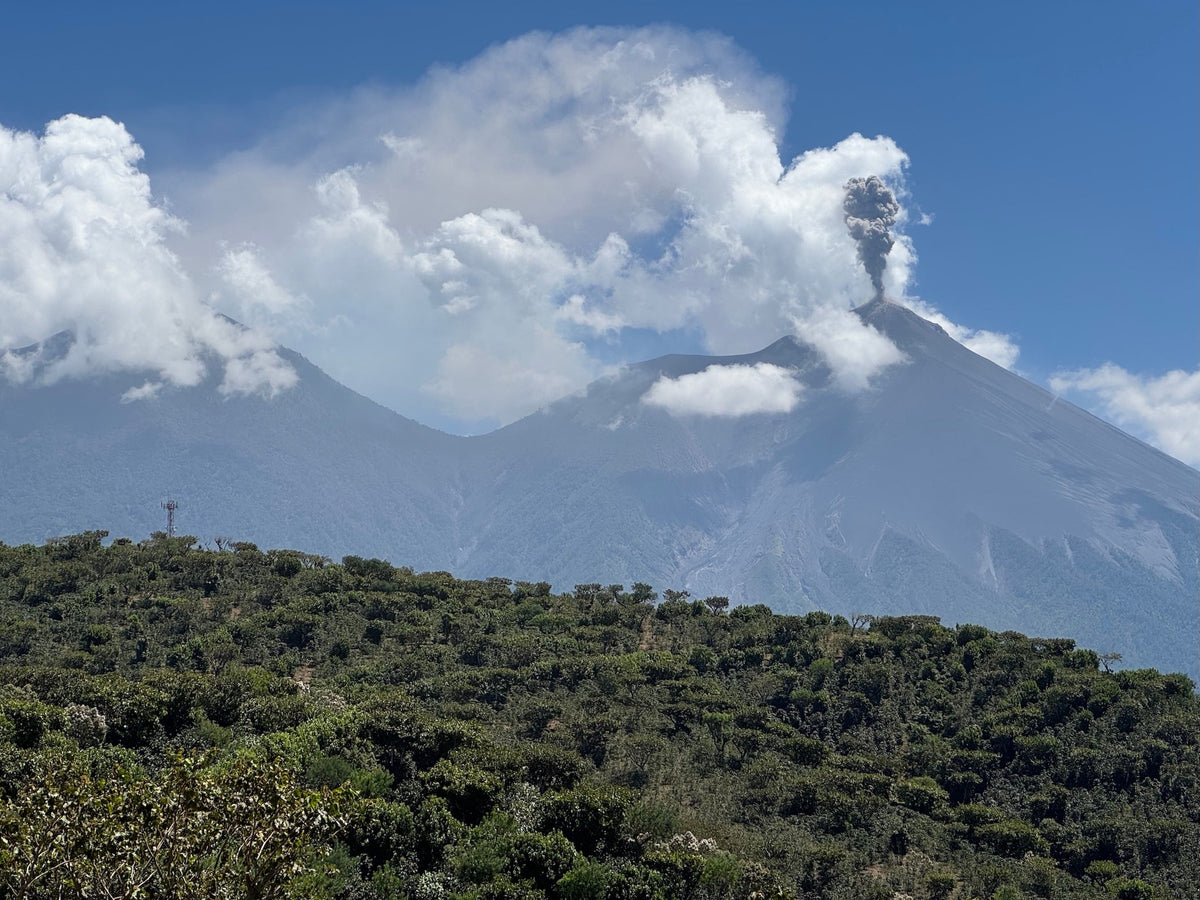
If you visit Antigua Guatemala, you're certain to romanticize the volcanoes that guard the old colonial city. Just south, framed by the Santa Catalina Arch, is the towering Volcán de Agua; further southwest are Acatenango and Fuego, joined together to form a complex known as La Horqueta, "the pitchfork." Locals speak of all three volcanoes with special appreciation and reverence.
Finca Santa Elisa Pachup lies on the lower western slopes of Acatenango within the department of Chimaltenango. At 506 hectares, it is easily the largest farm we buy coffee from in Central America. Around 360 hectares are planted with coffee, an area just slightly larger than Central Park. Elevations on the farm range from 1,200 to 1,700 meters - quite good for 14° latitude - and the coffee benefits from shade provided by native trees as well as cultivated Grevilleas.
As recently as 2017 Santa Elisa was struggling to produce more than 700 quintales of coffee fruits - around 140,000 pounds, but meager for a farm of its size. Owing to recent upgrades to the farm's infrastructure and a new approach to its management, it now produces around 34,000 quintales on the same amount of land. The farm currently employs around 300 seasonal workers between October and February, making it a significant source of income for residents of the nearby town of San Pedro Yepocapa.
Gesha makes up a tiny fraction of Santa Elisa's production. It is a delicate, low yielding arabica variety that can be very difficult to cultivate, hence its scarcity. When grown, harvested, processed, and roasted well, it produces an exceptional washed coffee with floral aromas and delicate, citrus and tea-like qualities. This specific lot was a standout on the cupping table in Guatemala this year, and it comprises the farm's entire Gesha production.
Once Santa Elisa's coffee is harvested it is trucked to Beneficio La Esperanza in nearby Antigua where it undergoes a fully washed processing. Volcanic ash can cause issues for the depulping equipment, so the staff at La Esperanza must exercise strict diligence in rinsing the coffee fruits with clean water before processing any of Santa Elisa's deliveries.
After processing is complete the coffee is moved to one of La Esperanza's two drying patios. The team at Los Volcanes is incredibly intelligent and precise in their approach to drying parchment coffee - something that's not usually celebrated as enthusiastically as more detailed fermentation practices, but equally crucial to good flavor and quality stability over time.
We've been partnered with Los Volcanes for many years for core blend components and for our single origin program. The heart of their business in Guatemala is Finca La Esperanza, an experimental farm that they operate adjacent to the beneficio of the same name. Here they carry out agronomic experiments - largely focused on organic and sustainable agriculture - to identify best practices or to challenge existing techniques. When a new tactic proves successful, they gradually test that approach on one of the other farms they manage to evaluate its efficacy under other soil conditions, elevations, and microclimates. In doing so, they are able to absorb much of the risk inherent to experimentation before making recommendations to the thousands of producers across Guatemala who supply coffee to them.
A note on spellings: both "gesha" and "geisha" are essentially correct, and refer to the same variety. The name is most likely derivative of the Gori Gesha forest in Ethiopia, where the variety is believed to have originated. The language spoken locally, Kafa, did not have a written form until the 1990s, and the more widely spoken Amharic does not share the English (Latin) alphabet - so for the recently appearing variety, there is no objectively correct transliteration. We've chosen to default to "gesha" to avoid any confusion with the term's Japanese significance.
Santa Elisa Pachup lies on the lower slopes of Acatenango, one of the three famous volcanoes that surround Antigua Guatemala. Owing to the near-constant activity of the neighboring Volcán de Fuego, the farm is frequently dusted with mineral-rich volcanic ash.
This fully washed gesha microlot was processed at Beneficio La Esperanza under the care of our friends at Los Volcanes Coffee. Delicate, elegant, and floral, this coffee has notes of clementine, meyer lemon, peach tea, raw sugar, and fragrant white flowers like honeysuckle, magnolia, and coffee blossom.
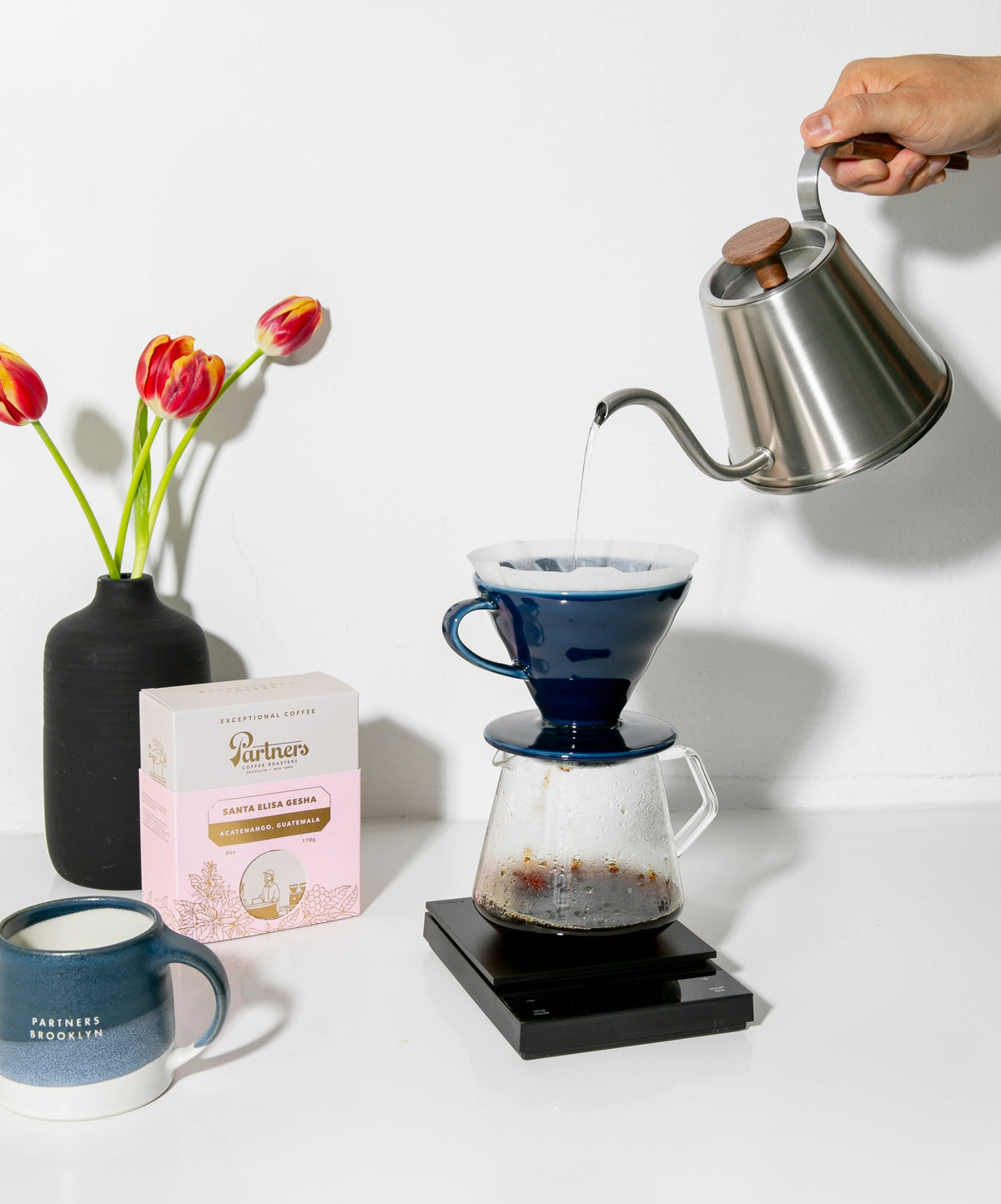
A quick note on packaging! For the box illustrations we worked with Moonsub Shin (@moonsub), who we wanted to specifically acknowledge. We have a history working with Moonsub that extends back to the early days (as well as more recent projects), and we immediately knew we wanted to collaborate with him on a packaging design that would feel extra special, but still feel like it had been with us the whole time.

Ready for a cup of excellence?

TASTING NOTES
Tangerine, Raw Sugar, Honeysuckle
ROAST LEVEL
Light
PROCESS
Washed
VARIETY
Gesha
REGION
San Pedro Yepocapa, Chimaltenango
ELEVATION
1,700 masl
PRODUCERS
Proyectos del Pacifico & Los Volcanes Coffee
SOURCE
Finca Santa Elisa Pachup
Explore our recommended Brew Guides for this Exceptional Coffee here and don't hesitate to reach out to us with any feedback or questions - we'd love to hear from you!

Leave a comment
This site is protected by hCaptcha and the hCaptcha Privacy Policy and Terms of Service apply.